Microsoft feels the heat from Linux...again - A report on Ars Technica about MS striving to gain a foothold in the flash-based laptop market - typified by the OLPC project, and by the remarkable Asus Eee (but what a silly name!). It's difficult for me to see the merits of XP on these small capacity systems, particularly since MS schedule ending support for XP next year.


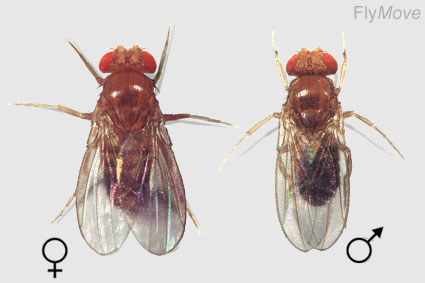
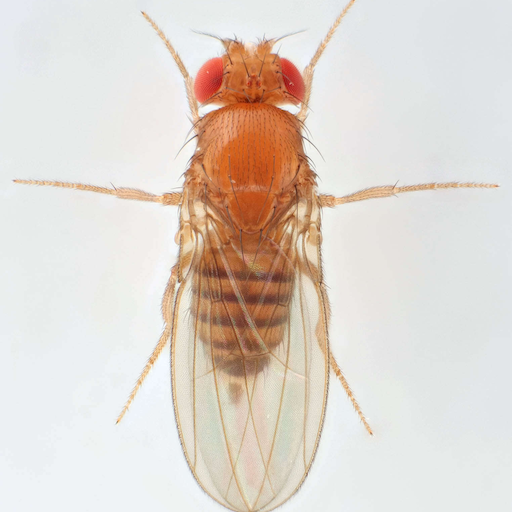
My laboratory uses the fruit fly Drosophila melanogaster as a model for biological processes, and in particular the biology of oxidative stress resistance and ageing. The value of this organism stems largely from its highly developed background of genetic research, and the sophisticated techniques of genome manipulation which are available.
Keeping Drosophila
1563 Hits
The Gal4-UAS system was devised by Andrea Brand and Norbert Perrimon some years ago, and it remains one of the more powerful contributions to the modern Drosophila genetic toolbox.
The system relies on a combination of two engineered P elements. P elements are a naturally occuring transposable element in the Drosophila genome: a complete 2.9kb element encodes a transposase enzyme that catalyses the element's excision and reintergration at novel sites. P elements were the first germline tranformation system developed for Drosophila. An engineered P element contains a marker gene that confers an easily recognised phenotype on flies bearing the element. Nowadays. the most common marker gene is white, which is required for the eyes of the fly to take up the red and brown pigments that give Drosophila its brick red eyes (white is so-named because mutants have white eyes due to an inability to take up pigments).
The first element of the Gal4-UAS system carries to transgene to be expressed, downstream of several copies of the yeast Gal4 Upstream Activating Sequence (UAS). Essentially, the UAS is a sequence to which the yeast Gal4 transcription factor binds, thereby driving transcription of the downstream sequences (in this case, the transgene of interest). In the absence of Gal4, the transgene contained within this element is transcriptionally inactive. We can refer to this element as the responder element.
1867 Hits

When I became interested in cycling again in the late 1980s, Robert Millar was for me the big name in the professional peleton. Only being peripherally involved in cycling at that time, I was really unaware of the Millar's full career at that time. Richard Moore has written an excellent account of Robert Millar's rise from Glasgow club cyclist to arguably Britain's finest professional road cyclist.
1405 Hits
cyclingnews.com reports that Iban Mayo's B sample has been retested and found to be EPO positive.', '
What's interesting here is that following the A test positive, the B tests performed in a lab in Gent were "inconclusive". The B samples have now been re-tested at the the French national anti-doping laboratory (LNDD) in Chatenay-Malabry. This lab is the focus of the Landis appeal - as far as I can tell not on the basis that the test results were wrong, but on procedural grounds - so i can see this one run and run. For my views on why EPO tests can be hard to interpret see my posting on EPO and EPO testing.
There are enough procedural uncertainties here that this story is very likely to run and run, particularly if Mayo is suspended or banned as a consequence. It's not good that these cases get prolonged while the protagonists argue the toss over procedural irregularities. Athletes have a capacity to lie over their guilt for a long time before evidence forces them to come clean - see for example the sad story of Birillo.
1350 Hits
Opera tries to force IE into W3C compliance with EU complaint; Firefox's success may work against it (report at ArsTechnica) - The internet browser company Opera has filed an antitrust action against Microsoft. The complaint is about the bundling of Internet Explorer in Windows and the alleged breakage of international web standards. There's another analysis over at Groklaw, of the usual high standard.
Ars Technica's belief is that FireFox's success will undermine Opera's case somewhat- but the case seems to go beyond merely bundling IE, but the inability to remove IE should you wish to, and the well-known MS attitudes to international standards.
1359 Hits
A child's view of the $100 laptop - Here's a report on the BBC describing the first experiences of a UK 9 year-old child with the XO laptop from the OLPC project. I think what's striking here is the ease with which the laptop's software is explored, and all of a sudden he's communicating with kids on another continent!
1364 Hits
Give me rice, but give me a laptop too - A very strongly worded pro-OLPC opinion piece from Bill Thompson, a journalist and regular on the BBC World service.
1345 Hits
Dutch government threatens to sideline Microsoft - here's a report from macworld (and the original Dutch report which i cannot read). One of the important feature about open file formats is that they are open. The consequence is that the contents will always be accessible in the future, even when the software that was used to open, edit and save those formats is long gone. Now despite Microsoft naming their new file formats OpenXML, the file formats are not open. In fact despite their efforts to pack ISO committees world-wide, Microsoft have so far failed to get their 6000 page partial description of the OOXML standard approved. If you are interested in a detailed description of MS activities, and issues to do with OOXML, here is the GrokDoc Dirty Tricks page and a summary of links (Groklaw).
What is evident is that there are half-truths being peddled, and MS are seeking to maintain user lock-in to their popular Office suite of applications: Office 2007 uses the new OOXML formats (e.g. docx). However the Open Document Format, being open (!), does not lock the user into any specific software package. It may, of course lock some packages out until such time as the software writers add odf filters.
1332 Hits